
Wishlist

    No Products in the Wishlist

Author name: reejinetcreations@gmail.com

Uncategorized

India’s Fitness Market Projected To More Than Double by 2030

India’s fitness market is projected to more than double in size by 2030, with experts pointing to massive “untapped potential” for gyms and studios to establish a foothold in the country with the world’s largest population and a fast-growing economy.  According to a new report from Deloitte India, produced in collaboration with the Health & Fitness Association (HFA), fitness revenue in India is expected to grow from INR16,200 crore ($1.9 billion) in 2024 to INR37,700 crore ($4.5 billion) by 2030. India currently has 12.3 million fitness facility members, accounting for just 0.8% of the country’s adult population. By 2030, it’s projected to have 23.3 million, up to 1.7%, per the report.  Over that same time period, the number of fitness facilities in the country is expected to grow by 6%, from 46,500 to 65,500.  Why India’s Fitness Market Is Just Getting Started The report’s authors noted that compared to other large countries, India has a very low fitness penetration rate — the percentage of the population with a fitness facility membership.  Read Next The Future of Caffeine Is Complicated, but Still Buzzing Less than 1% of all Indians currently have a gym or studio membership. But a fast-growing economy and rising health awareness point to a bright fitness future for the world’s most populous country India’s fitness market is projected to more than double in size by 2030, with experts pointing to massive “untapped potential” for gyms and studios to establish a foothold in the country with the world’s largest population and a fast-growing economy.  According to a new report from Deloitte India, produced in collaboration with the Health & Fitness Association (HFA), fitness revenue in India is expected to grow from INR16,200 crore ($1.9 billion) in 2024 to INR37,700 crore ($4.5 billion) by 2030. India currently has 12.3 million fitness facility members, accounting for just 0.8% of the country’s adult population. By 2030, it’s projected to have 23.3 million, up to 1.7%, per the report.  Over that same time period, the number of fitness facilities in the country is expected to grow by 6%, from 46,500 to 65,500.  Why India’s Fitness Market Is Just Getting Started The report’s authors noted that compared to other large countries, India has a very low fitness penetration rate — the percentage of the population with a fitness facility membership.  “While the market is poised to more than double by 2030, what stands out is the untapped opportunity, as nearly 820 million Indians between 18 and 62 years of age remain completely inactive,” said Praveen Govindu, a partner at Deloitte India.  India’s current fitness penetration rate of 0.8% is far below that of other large markets. The United States has by far the highest penetration rate of all large countries, with 25% of Americans belonging to a club, gym or studio in 2024, according to HFA data.  The U.K. and Germany come in second and third place with 17% and 14% rates, respectively. Other emerging markets, like Brazil (7%, as of 2022) and China (3%, as of 2019), also significantly outpace India, likely owing to stronger economic development.  That said, experts believe there are reasons to believe in the future of fitness in India. The Deloitte-HFA report pointed to factors including rising health awareness, technological innovation, changing consumer attitudes and increasing disposable incomes in the Southern Asian country. “The next wave of growth will not only be about opening more facilities, but about designing inclusive, affordable and community-driven models that can reach smaller towns, women and lower-income households,” Govindu said. 

Uncategorized

A low-carb diet may help IBS as much as tricky elimination diets, and more than drugs

Dietary changes relieved abdominal pain and other symptoms of irritable bowel syndrome more effectively than medications, a new study shows. Seven out of 10 study participants reported significant reductions in IBS symptoms after adopting either a type of elimination diet called the FODMAP diet or the simpler-to-follow, low-carb diet. “Diet turned out to be more effective than medical treatment,” said dietician Sanna Nybacka, the study’s lead author and a postdoctoral researcher at the University of Gothenburg in Sweden. “It’s probably more cost effective to provide foods and guidance on how to eat to people than giving them a lot of very expensive medications.” Moreover, the diet need not be complicated, according to the study published last month in The Lancet Gastroenterology and Hepatology. A low-carbohydrate diet provided nearly as much symptom relief as traditional IBS dietary advice, which limits a group of short-chain carbohydrates known as FODMAPs, found in many common foods including dairy, legumes, onions and garlic and grains. An estimated 6% of Americans, the majority of them women, suffer from IBS. Symptoms include abdominal pain coupled with diarrhea or constipation or both and no visible signs of disease in the digestive tract. Chronic stress can trigger symptoms. Researchers randomly divided 294 Swedish adults, mostly women, with moderate to severe IBS symptoms into three groups. One group received traditional IBS dietary advice — including eating regular meals, limiting consumption of coffee, alcohol and soda — along with free home-delivered groceries and recipes for a diet low in FODMAPs, an acronym for fermentable oligosaccharides, disaccharides, monosaccharides and polyols. A second group received free home-delivered groceries and recipes for a diet low in carbohydrates. A third group received free optimized pharmaceutical treatment. After four weeks, participants in both the diet groups reported significantly reduced symptoms — a 76% reduction with the low FODMAP diet and a 71% reduction with the low-carbohydrate diet. The medication group reported a 58% reduction in symptoms. Two weeks after the study began, one participant, a woman in her 50s on the FODMAP diet, cried as she described the relief from abdominal pain she felt for the first time in her adult life, Nybacka told NPR. Others in both dietary groups also said they felt better than they had for as long as they could remember, she said. In addition to IBS symptom relief, participants in all three groups reported less anxiety and depression and an improved quality of life. After six months, study participants had resumed some of their previous eating habits, but a majority continued to report fewer IBS symptoms. Researchers were surprised that the low-carbohydrate diet worked as well as it did, Nybacka said. They added the diet to the study after patients who had tried it in an effort to lose weight or control diabetes told them it had reduced their IBS symptoms. A low-carbohydrate diet is easier to follow than a more complicated and restrictive FODMAP diet. Dr. Lin Chang, a gastroenterologist and a professor of medicine at the University of California, Los Angeles, said the study supports the long-term benefits of diet in treating IBS. And the study informed her that a low-carb diet, high in protein and fat, could reduce IBS symptoms. “That was new,” she said. But she believes the study might have biased diet over medicine. “It wasn’t completely a fair comparison,” said Chang, who wasn’t involved with the study. Patients often need to be on medications for longer than four weeks, the length of the study, to see benefits, Chang said. In addition, American doctors prescribe IBS medications that are unavailable in Sweden, she said. “Medications are still effective,” she said in a Zoom interview. “And I wouldn’t necessarily say that this study to me proved definitively that diet was better or more effective than medication.” Nybacka agreed that a few additional weeks on some of the prescribed medications might have allowed them to reach their full potential. “But we cannot ignore the fact that the dietary treatment led to a twice as large symptom reduction in just four weeks,” she wrote in an email. Chang also noted that behavioral therapies, such as cognitive-behavioral therapy, which the new research did not study, can reduce IBS symptoms. Some doctors are now prescribing apps that offer mind-body support. Diets are not for everyone, Chang added. She would not put a patient with disordered eating on an elimination diet, for example. Following these diets without free grocery and recipe deliveries could be challenging, but Chang pointed to meal-services companies. Many, including Green Chef, Hungry Root and Trifecta offer low-carb or paleo meals. A few, including Epicured and Modify Health even offer low FODMAP plans. (Chang provided consultation to Modify Health on IBS and diet.)

Uncategorized

It’s never too late to get fit

How does fitness and movement change across the lifespan? According to NPR’s Allison Aubrey, who covers health and wellness, the official recommendation is to aim for more than 150 minutes a week of moderate-intensity physical activity. That could be running, walking, biking, swimming, or weightlifting. We meet a group of active older people, who show it’s never too late to find movement and exercise that works for you.

Uncategorized

Fidgeting at your desk? Your body may be trying to tell you something

Ever wonder why you bounce your leg, drum your fingers or click and unclick your pen until your colleagues beg you to stop? Don’t fight the fidget! It may be your body’s way of telling you that “for whatever reason, you need movement right now,” says Katy Bowman, a biomechanist and the author of the books Rethink Your Position and Movement Matters. So get up, switch positions, stretch or do some physical activity. Scientific support shows it’s good for our health. Fidgeting increases blood flow to our limbs, helps regulate blood sugar and reduces the risk of mortality from prolonged sitting. It can relieve stress and anxiety and improve attention, especially for some people with ADHD or other neurodivergent But as many of us know, it can be a challenge to tear away from our computers in the middle of a workday. Physical therapists and researchers break down our urge to fidget and offer office-friendly ways to satisfy the need for movement. Change your position (and don’t worry too much about the “right posture”) Fidgeting is a sign you need to break out of a stagnant posture, says Bowman. Even a position that feels comfortable at first can begin causing back pain, headaches or stiffness if you hold it long enough. So listen to your body and mix things up. Alternate between sitting, standing, reclining and moving. That might mean opting to stand in the back of a conference room during a big staff meeting, taking a call while going on a walk or reading a report with your feet propped up in the break room. You might also try a hybrid sit-stand desk. Studies have shown such desks can reduce discomfort in your lower back, neck, shoulder and more. The goal is to put yourself in configurations that contort your body in different ways. They should be “adaptive and dynamic” and easy to “change in and out of,” says Leada Malek, a physical therapist and author of the book Science of Stretch. Don’t worry too much about what is “good” and “bad” posture. Both Malek and Bowman agree on a common phrase among physical therapists: “Your best posture is your next posture.” Anticipate your need for movement  Regardless of how you fidget or move throughout the day, Bowman wants to dispel the idea that movement shouldn’t belong in our workplaces. “There’s a big assumption that if people are moving and taking care of their bodies’ physical needs, they can’t possibly address their mental needs,” she says. In fact, there’s ample evidence to the contrary: “If you are someone who needs to move, moving can really help you regulate yourself.” And that allows you to do the best work possible. Schedule “exercise snacks”  Get ahead of your fidgeting by taking a movement break after every task. Do 10 squats at the top of every hour or some jumping jacks every time you cross something off your to-do list or finish up a meeting, says Malek. Sitting at a desk all day puts stress on your spine, shoulders and hips. Eventually, that can lead to chronic pain. A sedentary lifestyle also increases our risks of cardiovascular disease, cancer and metabolic disorders. “Doing a three-minute workout, walking or doing lunges up and down your room could help a lot” with any physical discomfort, says Malek. Done regularly, these short bursts of intermittent exercise, called “exercise snacks,” can also increase your metabolism and help you live longer, says Jayne Morgan, a cardiologist and vice president of medical affairs at Hello Heart, a cardiovascular-health tracking app. Go for a five-minute walk (every half hour to be precise) If you are averse to getting in your exercise snacks in a crowded office, you could also check that box with short, frequent walks. Researcher Keith Diaz and his team at Columbia University Medical Center, in partnership with our colleagues at Body Electric, set out to find the least amount of movement you need to counteract the dangers of prolonged sitting. “We found that a five-minute walk every half hour offset a lot of the harms of sitting,” Diaz says. With just five minutes of leisurely walking, study participants saw blood sugar spikes after a meal reduced by almost 60%. And you don’t need to be booking it, either. “Any pace of walking provides some cardiovascular benefit,” says Morgan. So take a few minutes to get up and pace around your office or complete a loop around the block. What about fidget toys?  You might have fidget toys like stress balls, fidget spinners and pop-its at your desk. What role do they play in our impulse to bounce and tap? The research on these toys is conflicting. Some studies on fidget toys among children and college students in the classroom have shown that these gadgets can negatively affect attention, memory and the ability to focus on tasks. Other studies suggest they can help regulate emotions or reduce anxiety among children, especially among active fidgeters. They may also be a useful tool for some children and adults with autism who do similar stimming, or repeated self-regulating movements. So if you want an outlet to help you meet more of your sensory or movement needs, you could try keeping some fidget toys on your desk. But take care — they might be a little distracting.

Uncategorized

Want to reduce soreness after a workout? Make time for this 4-step routine

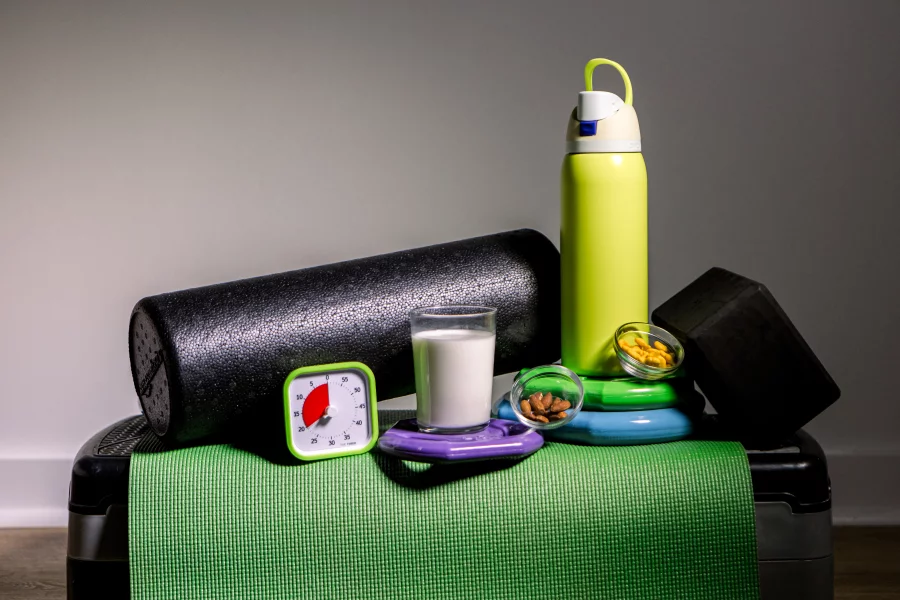
Before Anna Cockrell became a professional track and field athlete, she didn’t always cool down or stretch after exercising. Between night classes and early morning practice in college, she didn’t have much time. Once she started paying attention to her post-workout routine, Cockrell, a two-time U.S. Olympian and Olympic silver medalist, says she saw her fastest times yet. “The things I’m able to do physically are far greater than anything I’ve ever been able to do in my life,” she says. Studies have shown that exercise recovery can reduce your risk of injury and soreness and help improve athletic performance. But many people don’t prioritize these activities after working out, says Dr. Natasha Desai, co-director of the Center for Women’s Sports Medicine at NYU Langone Health. “People usually only schedule time for that physical stress — and none for support and self-care, which is a recipe for disaster in the long-term,” she says. Whether you’re a pro athlete or new to fitness, here are four essential activities to do after hitting the gym — and why you should do them, according to science. Step 1: Cool down for 10-15 minutes. It’ll help prevent dizziness and fatigue.  The cool down is like the off-ramp of your workout. Just as you wouldn’t jump immediately into the hardest portion of your exercise session, “it’s a bad idea to go straight from your last rep to your car,” says Cockrell. When you exercise, your heart diverts blood flow away from organs that aren’t being used, and sends it to your muscles to help them contract. But after you work out, you no longer need that greater blood flow to your muscles. To redirect blood flow back to your organs, take a moment to cool down, or gradually decrease the intensity of your physical activity. When people skip this step, they might experience a big drop in blood pressure, feel dizzy or fatigued, Desai says. How to do it: Spend 10 to 15 minutes doing a low-intensity movement of your choice after your workout. That might be speed-walking, slow-jogging or biking at a lower cadence, Cockrell says. You can alternate between the movements. If that means shaving some time off the hard part of your training session to squeeze in this effort, so be it, Cockrell says. Her workouts are “not complete until I cool down.” Step 2: Try rolling out your muscles. It might feel good. Now, it’s totally fine to feel a little sore after your gym session, Desai says. You might even like it — that soreness means you put in the work. But if you wake up the next morning feeling like you can’t get out of bed, that’s too sore, she says. “That means there’s so much tension in that muscle that if you worked out hard [the next day or a few days later], you could really injure yourself.” You may find it helpful to try foam rolling, especially if you are struggling to stretch your quads, hamstrings and the iliotibial (IT) band, says Desai. It’s a type of gentle soft-tissue massage that you can do on yourself after a workout. “The evidence for foam rolling is weak to directly prevent soreness, but the downside [to doing it] is pretty minimal,” she says. So if you “feel like it helps, keep doing it.” One 2015 study has shown that foam rolling your muscles could make a big difference in reducing soreness in subsequent days. Researchers had eight male participants do sets of heavy back squats, followed by either no foam rolling or 20 minutes of foam rolling right after, and then again a day and two days later. Those who took the time to foam roll could sprint more quickly and jump farther in follow-up tests. They also reported less pain. How to do it: You can purchase a basic foam roller in the $10 to $15 range, though if you belong to a gym, they’ll likely have some available as well. Place your foam roller on the ground and lie down on top of it, making sure the muscle you want to hit is positioned above. Then slowly roll your body back and forth for about a minute before hitting the next muscle. Concentrate on the muscle groups you used during your workout — in the above study, participants concentrated on their quads, hamstrings, glutes and more. Step 3: Stretch your muscles to improve flexibility and prevent injury.  While it’s easy to gloss over this step, stretching is key for preventing injury. Doing it regularly helps improve flexibility and range of motion, according to guidance from the Mayo Clinic. The secret is to strike the right balance of discomfort. It can be tempting to push the limits of your flexibility, but stretching should never feel painful, Cockrell says. How to do it: If you’re not sure which stretches are best, start with the basics. If you feel pain, scale back. These stretches should feel like a light pull on your muscles. Aim to hold them for about 30 seconds, according to the Mayo Clinic. Step 4: Eat protein to build up new muscle fibers. How you fuel yourself after you exercise can actually make a difference in how much muscle you build. The secret is protein, and lots of it, says Jeremy Ford, a sports dietitian and nutritionist at the University of South Carolina. When you work out, you create microtears in your muscle fibers. In response, your body repairs those weaker muscle fibers and fortifies them, making them stronger. Eating protein can help build up those fibers, Ford says. Your body will break it down into amino acids that are then incorporated into those new muscle cells. Sports medicine experts recommend up to 1.7 grams of protein per kilogram of body weight each day for people who are actively training, which is about 115 grams for a 150 pound person, reports NPR’s Allison Aubrey. While there’s conflicting scientific evidence about when exactly to eat that protein, Ford says it “may be in the person’s best interest to resume nutrition as soon as possible for

Uncategorized

Men have body dysmorphia too. That’s why some use this drug.

Body modifiers like Ozempic and other weight loss drugs have gotten attention for how skinny they can make you. But what if you’re a boy who wants to get BIGGER? For young men, there’s another drug getting more and more popular: steroids. Fit and muscular bodies get celebrated on social media, and many men turn to steroids to match what they see. But with that comes the rise of “muscle dysmorphia,” a kind of body dysmorphia where a person feels that their muscles aren’t big enough. Brittany sits down with Roberto Olivardia, a alinical psychologist and lecturer at Harvard Medical School, to talk about how a drug, once primarily associated with professional athletes pursuing performance enhancement, is now the drug of choice for boys and men struggling with negative body image. For more, check out Roberto’s book, The Adonis Complex.

Uncategorized

Are high-protein snacks worth the hype? Here’s how to assess

Protein has never gone out of style. While fat was demonized as the nutrient causing weight gain in the 1990s, followed by carbs in the 2000s, protein sat by the sidelines as the official people pleaser of the macro-nutrient world. “You need essential amino acids in the diet in order to sustain life,” says Stefan Pasiakos, director of the Center for Human Performance Optimization at the Pennington Biomedical Research Center. Protein is needed for building and repairing muscle and tissues and helps support your immune system. Protein stepped into the spotlight in recent years as keto and other high-protein diets took off. Health and fitness influencers started to push everyone to eat more muscle-building foods in every meal (deep-fried cottage cheese Doritos anyone?) The nutrient is so ubiquitous online that one influencer asks whether protein can leave him alone for five minutes. And it has now taken over the snack food aisles, with “high-protein” or “protein-packed” labels on the front of products as diverse as sweet rolls, chips and pretzels. There’s even a high-protein version of a Snickers bar. Leaning into protein claims on packaging Of course, these claims don’t always mean the food is good for you or even a good source of protein. “You’ll see chips labeled high protein,” says Pasiakos, who is a former director of the National Institutes of Health’s Office of Dietary Supplements. “In reality, they’re probably not, but people are now trying to jump all over it.” The global protein-snacks market alone is projected to grow from $50 billion in 2024 to $101 billion by 2032, according to Fortune Business Insights. Snack-makers often market protein front and center on their packaging without mentioning the food’s sugar content, says Pasiakos. For instance, a candy with 1 gram of protein may have a high-protein marketing claim on the front of the package and to the maker, “it may not even be a false claim because they’re thinking, ‘If you looked at another candy, it’s not going to have a gram of protein in it,’” he says. Among many examples, Smash Foods’ cashew butter and blueberry jam Snack Bites, sold at Whole Foods, advertises 5g of protein, yet it has 16g of sugar, more than triple its protein amount. 365 Chewy Protein Bites aren’t much better, with various flavors having about 20g of sugar to 10g of protein. The Food and Drug Administration regulates marketing claims on packaged foods, restricting manufacturers from making big, overarching health claims without proof. For instance, companies can’t claim their food prevents heart attacks or cures cancer, Pasiakos says. They also can’t use the word “healthy” or derivatives of the word without meeting the FDA healthy standards of providing a specific amount of a nutrient within a food group. So saying something is “high protein” can be a way of working around the regulations while signaling to consumers that a food might be good for them. How to judge? Try a little math So how do you determine whether a snack making protein claims is worth eating? Pasiakos offers this simple calculation to get a sense of what share of the food’s total calories is derived from protein. Take the number of grams of protein in the product and multiply it by 4 — that’s the number of calories per gram of protein. Now you know the calories from protein in the food. Then take the protein calories and divide by the total calories in the food. That gives you the share of calories in the food that comes from protein. For instance, let’s say a protein bar has 20 grams of protein and 200 calories. You’d multiply 20 × 4 to get 80. Then you’d divide 80 by 200 and get 40%. “Anything that was high in protein would have 30% or more of protein by calorie count,” says Pasiakos. Another option would be to check the percentage of the daily value (listed as DV) of protein listed on the Nutrition Facts label on the package. Anything 20% or above can be seen as high protein, according to the FDA. But even if a snack is high in protein, is it automatically healthy? Not necessarily. “Protein’s important, but it’s not the only nutrient we should be looking at,” says Clare Parme Miller, a New York-based registered dietician for Lifeways Nutrition. It’s equally important to get enough of other nutrients like fiber and to avoid foods high in added sugars or highly processed ingredients. “Look for snacks with added sugars of less than 10 grams that are less processed than most protein bars,” she suggests. And, you may not need your snacks to be high protein, she notes. The federal government suggests adults get at least 0.8 grams of protein per kilogram of body weight (or 0.36 per pound), which is 51 grams for a 140-pound woman who isn’t pregnant or breastfeeding. Some nutrition and fitness experts recommend more, especially for those seeking to build muscle and for older people. So when it comes to snack time, says Parme Miller, “especially if you’re getting 20 to 30 grams of protein at mealtime, snacks only need to provide 10 to 15 grams.” (The U.S. Department of Agriculture has a handy nutrient calculator that takes into consideration your age and activity level.) Whole foods snacks can pack in protein too It’s not hard to meet protein minimums with whole foods, says Parme Miller, instead of reaching for packaged snacks with protein claims. “Greek yogurt or small cups of cottage cheese will fulfill your protein requirement and also provide calcium,” says Parme Miller. Add berries for a boost in fiber and antioxidants. Nuts without other added ingredients and roasted chickpeas, in single-serving sizes, provide less protein than Greek yogurt but can be paired with other items to get to 10 grams. For instance, you could add whole grain crackers to boost protein a bit and get another food group in. An ounce of cheese plus a few whole grain crackers also gives you protein and whole grains, which are high in fiber and contain calcium and several

Scroll to Top